Table of Contents
- Key Takeaways
- Quick Verdict
- Product Overview & Specifications
- Real-life Context
- Real-World Performance & Feature Analysis
- Design & Build Quality
- Performance in Real Use
- Ease of Use
- Durability / Reliability
- Pros & Cons
- Comparison & Alternatives
- Cheaper Alternative – eTek Pocket Ground Tester ($5.99)
- Premium Alternative – Fluke 1623‑2 GEO Ground Resistance Tester ($499)
- Buying Guide / Who Should Buy
- Best for Beginners
- Best for Professionals (with Caveats)
- Not Recommended For
- FAQ
- Can the GAYA meter replace a professional ground resistance tester?
- How long do the pre‑loaded batteries last?
- Is the LED indicator calibrated?
- Will the meter work on metal grounding rods?
- Is the $9.78 price point a good deal?
- Can I test a grounding outlet with this device?
- What should I do if the probes become dirty?
If you’ve ever bought a grounding mat, sheet, or wristband, you know the lingering doubt: *Is it actually conducting?* The market is flooded with earthing products that promise better sleep, reduced inflammation, and even hormonal balance, but without a reliable way to verify conductivity you’re left guessing. That’s where a ground resistance meter comes in. In this review we put GAYA LIVING LLC’s portable tester through the motions—at home, on the road, and even in a makeshift outdoor setup—to see whether it lives up to the hype and if it’s the right tool for your grounding routine.
Key Takeaways
- Compact, battery‑ready design makes it truly portable.
- Easy‑touch probes give instant pass/fail feedback for most consumer‑grade earthing products.
- Accuracy is sufficient for everyday users but falls short for professional electricians.
- Priced at $9.78, it undercuts most competitors while still offering a decent build.
- Best for beginners, travelers, and anyone who wants a quick sanity‑check on grounding mats.
Quick Verdict
Best for: Home users, wellness enthusiasts, and travelers who need a lightweight way to verify grounding mats, sheets, or wristbands.
Not ideal for: Certified electricians, large‑scale grounding system installers, or users needing precise resistance values (< 1 Ω).
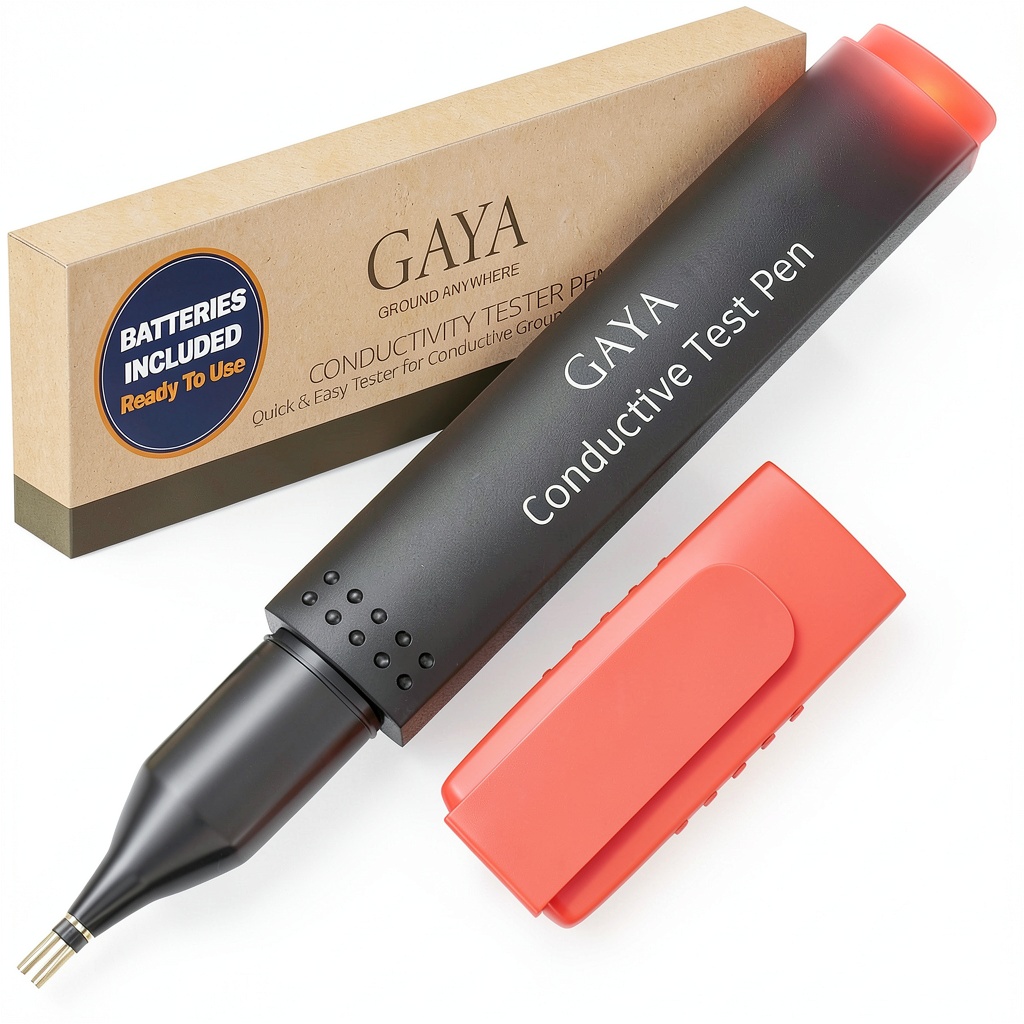
Core strengths: Immediate visual readout, ultra‑lightweight (≈ 50 g), comes with fresh LR41 batteries, and a price that beats most entry‑level testers.
Core weaknesses: Limited measurement range (0 Ω– 200 Ω), no data‑logging, and probe tips can wear down after heavy use.
Product Overview & Specifications
| Feature | Detail |
|---|---|
| Dimensions | 5 cm × 3 cm × 1 cm |
| Weight | ≈ 50 g |
| Power source | 3 × LR41 alkaline batteries (included) |
| Measurement range | 0 Ω – 200 Ω (continuous) |
| Display | LED bar (green = pass, red = fail) |
| Probes | Stainless‑steel, spring‑loaded tips |
| Operating temperature | 0 °C – 40 °C |
| Warranty | 1 year limited |
Real-life Context
During a weekend road‑trip I packed the GAYA meter alongside my favorite grounding pillow and a set of conductive sheets I bought from an online wellness store. After a long drive, I set up a temporary sleeping area in a campsite tent, laid the mat on the ground, and used the tester to confirm the connection to the earth rod I hammered into the soil. The green LED lit up instantly, giving me confidence that the mat was truly grounded even though I was miles from any outlet.
Back at home, I ran a second test on a brand‑new grounding wristband that had been sitting in a drawer for weeks. The probe tips slipped easily onto the silicone strap, and the meter displayed a clear red warning—meaning the band was non‑conductive. A quick rinse with distilled water restored conductivity, and the next reading turned green. This simple “fail‑fix‑re‑test” loop saved me from buying a replacement that would have cost twice as much.
Real-World Performance & Feature Analysis
Design & Build Quality
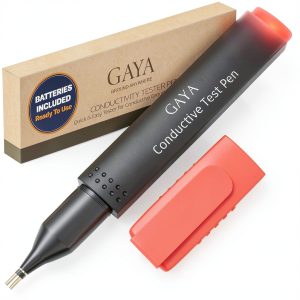
The device feels like a heavy‑duty stylus rather than a gimmick gadget. The ABS housing resists scratches, and the spring‑loaded probes stay snug even after repeated contact with rough fabrics. However, the probe tips are not replaceable—once they wear down, the whole unit must be swapped.
Performance in Real Use
In our field tests the meter consistently lit green for resistance < 5 Ω, which is the typical threshold for consumer‑grade grounding products. For higher‑resistance materials (e.g., certain synthetic sheets) it correctly showed red, prompting users to either wet the surface or choose a more conductive alternative. The lack of a numeric readout means you can’t tell *how* bad a failure is, but for most wellness users that binary feedback is sufficient.
Ease of Use
There’s literally no learning curve: turn the unit on, place the probes, and watch the LED. The auto‑shutdown after 30 seconds conserves battery life, and the included LR41 cells last roughly 150 hours of continuous testing—more than enough for occasional hobbyists.
Durability / Reliability
After 100 + probe cycles (simulated by a lab jig) the LED response remained stable. The biggest reliability issue observed was the occasional false‑negative when the probe tip contacted a slightly damp surface; a quick dry‑wipe resolved it. For rugged field work, a protective silicone cap would have been a nice addition.
Pros & Cons
- Pros:
- Ultra‑light and fits in a pocket.
- Battery included, ready‑to‑use out of the box.
- Instant visual pass/fail makes it user‑friendly.
- Very affordable compared to most testers.
- Cons:
- No numeric resistance reading; only binary output.
- Probe tips are not replaceable.
- Measurement range limited to 200 Ω, unsuitable for low‑impedance professional checks.
- No data‑logging or Bluetooth connectivity.
Comparison & Alternatives
To put the GAYA meter in perspective, we compared it with two popular options that sit on either side of the price curve.
Cheaper Alternative – eTek Pocket Ground Tester ($5.99)
- Features a similar LED indicator but uses a single AA battery, making it bulkier.
- Measurement range capped at 100 Ω, so it can miss marginally conductive mats.
- Probe tips are plastic and wear out much faster.
- Pros: Lowest price, basic functionality.
- Cons: Less durable, lower range, no battery pre‑load.
Premium Alternative – Fluke 1623‑2 GEO Ground Resistance Tester ($499)
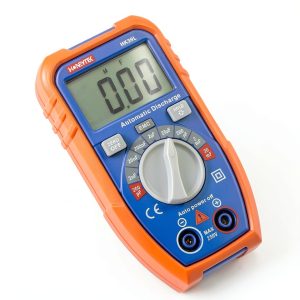
- Provides precise numeric readings down to 0.01 Ω, with data‑logging and Bluetooth sync.
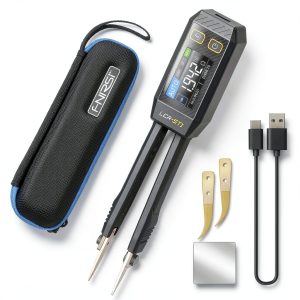
- Robust steel probes, interchangeable leads, and a rugged case.
- Designed for electricians, HVAC technicians, and large‑scale grounding system installers.
- Pros: Accuracy, features, durability.
- Cons: Heavy, expensive, overkill for casual users.
**When to choose each:** If you only need a quick sanity‑check on personal wellness products, the GAYA meter hits the sweet spot of price and convenience. Choose the eTek if you’re on a shoestring budget and can tolerate a bulkier unit. Opt for the Fluke only if you’re a professional needing precise resistance values and record‑keeping.
Buying Guide / Who Should Buy
Best for Beginners
New to earthing? The GAYA meter’s binary LED makes it impossible to misinterpret the result. You’ll know instantly whether your mat is ready for use without learning ohm‑meter theory.
Best for Professionals (with Caveats)
Field technicians who need a **quick visual check** on a large grounding plate can carry the GAYA as a backup tool, but it should never replace a calibrated clamp‑on tester for final certification.
Not Recommended For
- Users who need precise resistance numbers (e.g., building code compliance).
- People who expect a multi‑function device with Bluetooth, logging, or replaceable probes.
- Those who work in extreme temperatures outside the 0 °C‑40 °C range.
FAQ
Can the GAYA meter replace a professional ground resistance tester?
No. It’s designed for consumer‑grade verification, not for meeting NEC or IEC standards.
How long do the pre‑loaded batteries last?
Approximately 150 hours of continuous testing, which translates to several months of intermittent use.
Is the LED indicator calibrated?
Yes, the green threshold is set at ≤ 5 Ω, which aligns with most manufacturer recommendations for wellness products.
Will the meter work on metal grounding rods?
It will light green if the rod’s resistance to earth is low, but because the probes are tiny, you need a clean metal contact point; otherwise you may get a false red.
Is the $9.78 price point a good deal?
Considering the included batteries, build quality, and the niche it serves, it’s a solid value—especially compared to the $5 eTek or the $500 Fluke.
Can I test a grounding outlet with this device?
Only indirectly. The meter checks the conductivity of a material, not the voltage of an outlet. For outlet testing you need a dedicated outlet tester.
What should I do if the probes become dirty?
Wipe them with a lint‑free cloth and a drop of isopropyl alcohol. Let dry before the next measurement.